
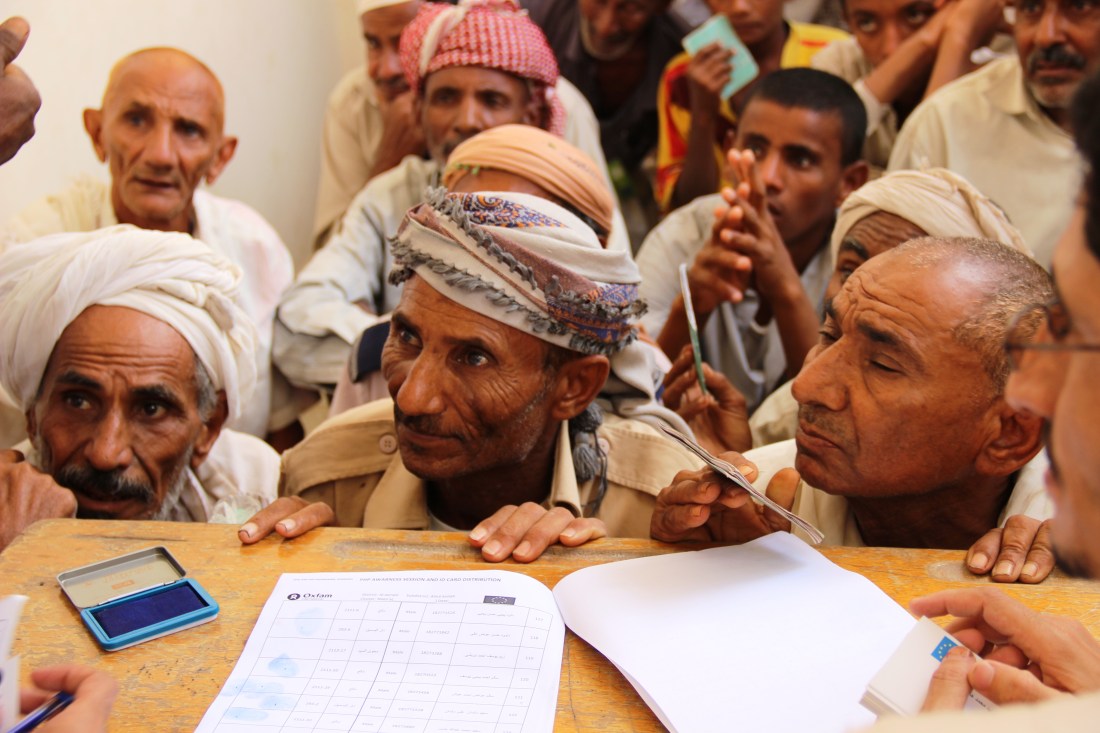
in this guest post, Najwa Whistler offers some insights into preventing and detecting fraud in beneficiary distribution lists. Experiences have been anonymised. Images are used for illustration only, and there is no suggestion that the events shown involved any of the issues discussed in Najwa’s article.
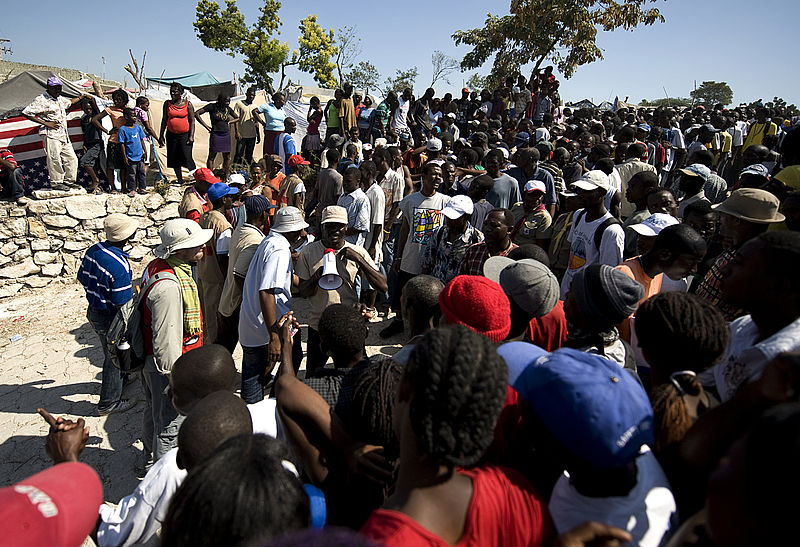
A common form of evidence that a distribution of food or Non-Food Items (NFIs, such as hygiene kits), a training event, or any other service actually took place is a list of named recipients. This might be either pre-printed or handwritten, and featuring the signature or fingerprint of the recipients. In principle this should work – but does it work in practice?
From the experience of my colleagues and I in different NGOs, in both emergency and non-emergency contexts, here are some real-life examples.
One organisation was distributing NFIs in a very insecure location to the most vulnerable population. The organisation relied on its local staff for the distribution, beneficiaries were asked for a fingerprint as the unique identifier of receipt, and the senior managers were satisfied upon receipt of all the distribution lists. But when an audit was conducted by the donor, the auditors became concerned about the lists and sent them to a forensic laboratory. The results came back that all the prints belonging to just five individuals, and not all were finger prints. I couldn’t remove the image from my head of someone dipping their toes in ink!

While the organisation went the extra mile to reach the unreachable and ensure no beneficiary was left behind, five people were going the extra mile to spend hours faking records to steal from them.
Another example is when these records come back crisp, clean and as good as new. You can be almost sure that the papers have never left the desk of the supervisor. Other things to watch out for closely are signatures that are easily recognised as being signed by the same person, signatures with repetitive recipient names, or family names that alternate with first names.
Of course, these red flags do not necessarily mean fraud has taken place. Sometimes, for example, one person signs on behalf of other beneficiaries because they couldn’t all travel to the point of distribution. Or maybe the supervisor signs on behalf of the beneficiaries because it is not practical to collect a signature or fingerprint during the distribution. These situations are different to the creation of phantom beneficiaries, or falsely confirming that a service or item has been delivered.
What can we do about it?
In acute emergencies, the efforts should be focused on reaching people, eliminating their suffering, and treating them with dignity and respect. Collecting recipients’ confirmation can be impractical at times.
 In these situations, organisations can rely on alternative evidence of the delivery, such as the evidence of the supplies’ transport to, and arrival at, the point of distribution. Distributions can also be recorded with modern technologies such as biometrics, body cameras on the distributors, or even mini-drones which can be deployed to record at a set altitude above a person wearing a transmitter.
Organisations can also consider:
- Conducting individual interviews with the staff involved in the distribution. Don’t exclude drivers and guards. They can be good witnesses, giving their experience of the distribution to enable organisations to compare stories for any inconsistencies or reasons for suspicion;
- Keeping photographs and videos from cell phones if no other technology is available;
- Ensuring that the delivery team is from different departments in the organisation, where possible;
- Ensuring that emergency response personnel are trained on the counter-fraud, anti-corruption and whistleblowing policies that the organisation has in place.
 In non-emergency activities such as training, incorporating fraud detection into post-event monitoring and evaluation is key. Organisations can randomly select a sample of recipients, contact them for feedback, and verify receipt of the items or service.
Monitoring questions of a training delivery might be:
- Your name?
- Did you receive any training in the last 6 months?
- Who was the provider?
- Where was the training?
- What was the subject of the training?
- What session did you find most useful?
- How did the training that you’ve received helped you improve in your daily work?
- Who else attended the training?
- How do you rate the trainer’s skills?
- Give one recommendation to improve future trainings, what can be done differently?
- What is your feedback on the venue? Was lunch provided? Did you receive a per-diem or transport cost? How much did you receive?
- Any comments/other feedback?
In summary, these days technology has made monitoring and evaluation much easier and more efficient. But even so, we must be careful not to exchange one set of risks for another. The key to successful prevention and detection of fraud in beneficiary lists is to think creatively, both about how we apply controls in difficult circumstances – and how we catch those who collude to overcome them.
 Najwa Whistler is a finance director with 18 years of experience working for several international NGOs around the world. Growing up in a small village in Lebanon in poverty during the civil war built her resilience and determination to work in international development. She enjoys cooking and dancing. You can reach her via naj.whistler@gmail.com
Cover photo: During the crisis in Yemen, ECHO funded a second phase of a cash distribution programme to help 4,000 families meet their basic needs during the pre-harvest lean season between July and December 2012. Close monitoring ensured that money was spent on essential items (ECHO/T. Bertouille, 2012).

 Some years ago, I found myself investigating events in a program in a war-torn country. The program had been set up to build the capacity of small local NGOs to implement community development projects. The concept was great, the donor funding had been secured, local partner NGOs had submitted proposals and agreements had been signed, transfers had been made and reports had been received. The only problem was that most of these NGOs didn’t exist.
 Ex-pat Nancy used to be a teacher in Canada, and this was her first job in an international NGO. She was young, and idealistic, but it was clear that she did not have the relevant skills and experience. A conflict zone is a dangerous and stressful place, often with high staff-turnover, and the international NGO had compromised on her qualifications to find someone willing to endure the hardship.
 When my team drove out to the field to visit the partners and the communities, I went with Malik, a driver, who turned out to be Raj’s brother. The driver tipped off the ‘NGOs’ that we were coming for a visit.
 Firstly, ensure a realistic and validated assessment of potential partners takes place. More than one person or function needs to be involved in this assessment, and it should compare project proposals. Involve logistics and procurement teams to verify market rates.
 There is a disconnect between the perception of reputational risk and the action taken to manage it.
 One of the report’s most surprising findings was the under-use of risk assessment. This might not surprise NGOs, however; my counter-fraud colleagues and I have found the quality and extent of risk assessment in the sector to be patchy at best.
 The biggest proportion of incidents reported were conflicts of interest, with personal favours not far behind. This may resonate with NGO managers; anecdotally, conflicts of interest in procurement and recruitment can be a real issue.
 Respondents most frequently declared organisational culture and tone-at-the-top as the greatest preventative factors. I have written about the link between culture and corruption for NGOs before (
 To read more about how to deter, prevent, detect and respond to fraud and corruption in humanitarian and global development work, make sure you pick up a copy of my book,
 It’s a great scene, and we celebrate Maverick’s daring heroics. But let’s be clear, this wasn’t what he was supposed to do. It was dangerous. We only celebrate because Maverick pulled it off. If something had gone wrong, Top Gun wouldn’t be a heartwarming movie about a young pilot’s quest for meaning, love and success. It would be a dark political thriller about a world on the brink of nuclear war following a mid-air collision caused by a reckless American pilot.
 Some international NGOs are tempted to break the laws and regulations of their countries of operation, registration, or both. Here we don’t so much mean situations where legal authority is unclear, or regulations and obligations are ill-defined or differently interpreted, or laws which violate human rights. Here we’re focussing on a situation where an NGO wilfully or negligently breaks legitimate, clearly-defined and communicated local laws and regulations. Temptations might include, particularly:
 When an incident of fraud takes places in a project where the NGO was working unlawfully, managers may then be incentivised against taking civil or criminal justice action for fear of drawing attention to the project’s own misdemeanours. This may significantly hamper the prospect of redress (getting our money back), and impact upon the available sanctions for a perpetrator. This, in turn, could damage the NGO’s ability to deter fraud and corruption if a potential perpetrator knows that such an outcome is unlikely.
 The risk goes even further, however. While international staff may be able to hop on the next plane home if things get too hot with local authorities, local staff can’t press that escape button. They may therefore bear the greatest risk of consequences like prosecution. This outrageous burden is hardly helpful to the positive workplace relationships necessary to help deter corruption and promote whistleblowing.
 An area where this ‘do-no-harm’ themed risk is particularly evident is where NGOs procure from the black market, an option that can arise during scenarios such as the recent fuel crises in
  Find out more about the risk that fraud and corruption pose to humanitarian and global development organisations, and how they can better deter, prevent, detect and respond to it, in my book! Click here to get your copy of Fighting Fraud and Corruption in the Humanitarian and Global Development Sector from the


 Anonymous donors are a normal feature of fundraising. We’ve all popped a few coins into a collection bucket. But where NGOs receive unusual or significant funds, with no information on their provenance, a red light should flicker into life. Anonymous giving could be the starting point for a number of laundering methodologies, perhaps even involving insiders. NGOs need to take reasonable steps to identify the sources of such contributions.
 An example might arise from the UK. In 2013, the Charity Commission
  Let’s say you are running a social development enterprise. A company approaches you to purchase a quantity of your beautiful wooden products. You’re delighted – but then the company asks if a second company can settle the invoice on its behalf. They’ll settle up between themselves, later, it says. The red light should come on.
 Let’s say that our rich, local businessman approaches you with a proposition. He wishes to store some money in a savings account, but he doesn’t like banks. Maybe he says they’re greedy and corrupt, and he wants to help those who live out his own commitment to social justice. He suggests giving you his US$100,000 – which he will retrieve in six months, while you get to keep the interest. Red light.
 A range of complex issues face NGOs that move funds into and around locations of elevated risk, such as conflict zones, fragile states and areas of significant terrorist activity. One of these is that we don’t know who else’s money an MTO is moving in or out of these places. If our NGO engages an unscrupulous, unregulated or badly-run MTO, there are real risks of breaching the principle of ‘do no harm’ and of reputational impact.
 This presents a very challenging issue for NGOs that work in high-risk areas, and one with significant tensions at its heart. These include the tension between minimising the risk of diversion versus disrupting the delivery of aid, competing obligations on the ground, and the wider balancing act between regulation and enforcement versus guidance and capacity building.
 Audit is a helpful process that
  In
In  In 2015, the UK government issued guidance describing the risk of a prosecution for a terrorism offence as a result of involvement in humanitarian efforts or conflict resolution as ‘
 Implied assurance of non-prosecution is always caveated, is not always made by those with the correct authority, and might not relate to that which is perceived. The British guidance note, for example, does not indicate whether it is referring to placing resources in the hands of terrorists (potentially s15-18 Terrorism Act offences), failing to have sufficient systems to prevent sanctions breaches (potentially a s34 Terrorist Asset Freezing Act offence of neglect), failing to report a suspected funding offence (s19 Terrorism Act), or some of those, or none – and so on. In any event, any decisions would be made on the basis of the prevailing circumstances of the case and it is worth noting that Save the Children International were investigated by the Metropolitan Police for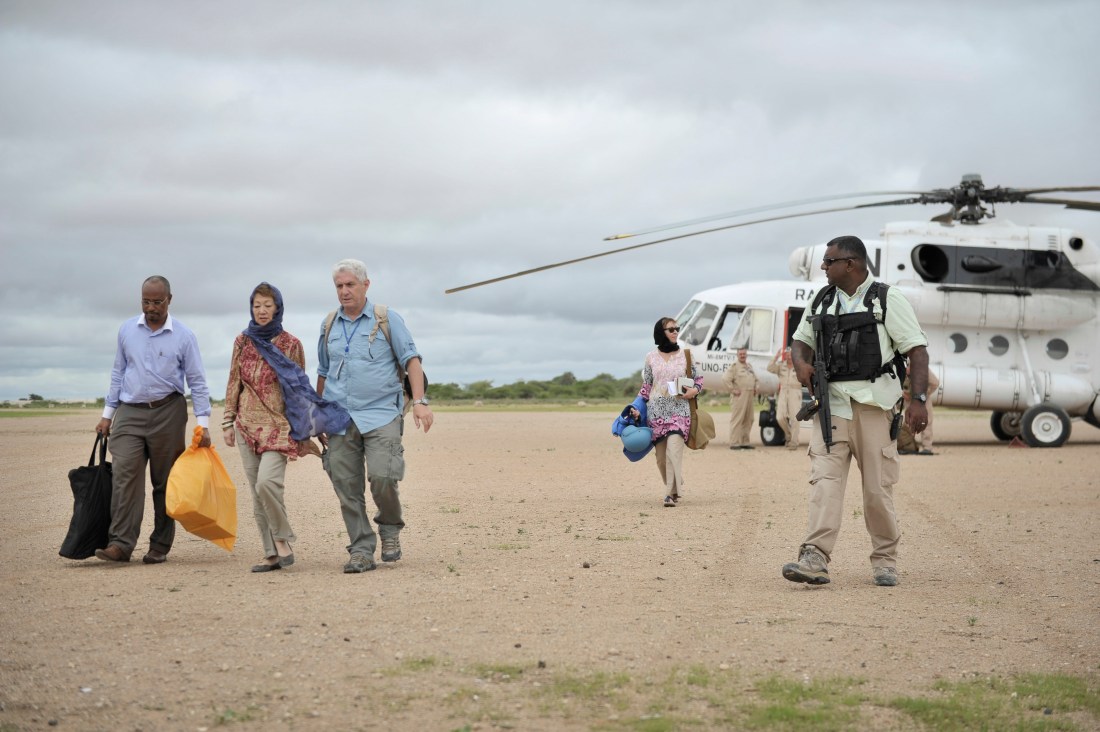
 But there is a tension. Case studies such the UN’s experience in Somalia support a perception amongst many in the sector that, generally speaking, working with local partners represents an elevated fraud and corruption risk. A range of reasons are commonly cited for this, but the most common perhaps is where partners carry lower capacity and capability in finance and wider management by comparison to that of the international agencies, or donor expectations.
 The first is the very reason international agencies often work with them in the first place – they understand their local environment. They know where the risks are, and are in a strong position to evaluate how to reduce them. This can mean more informed planning (how long does it take to get that permit without paying a bribe?) and risk management, if the space is given to it.
 Whether in remote programme management or not, local partners are often physically closer to project delivery or able to more efficiently move around and interact. This is a substantial advantage for monitoring, and the detection of red flags.
 Development expert Jennifer Lentfer tells
  The global coverage of telecommunications is expanding as fast as its costs are declining, meaning that much humanitarian and development work is happens underneath its umbrella. This means that innovative software and hardware solutions to manage and monitor programming are increasingly available and affordable.
 There are corrupt local organisations out there, of course, who have the sole or corollary aim of gaining access for their principals to international agencies’ funds. But the vast majority of local organisations whom I have encountered have been full of passionate people doing amazing work in difficult circumstances. Robust selection processes are needed to ensure that these are the partners who are taken on.
 In 2010, there were a
  Research suggests that we feel losses more intensely than gains – so if you lost a £100,000 sports car, you’d feel that much more powerfully than you would if you won a £100,000 sports car in one of those airport car lotteries. This emphasis leads to an
 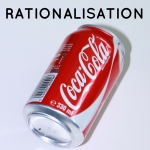 Celebrated psychologist Dan Ariely conducted an interesting experiment in which he placed dollar bills and cans of Coca-Cola around the campus of an American university. When he went back, the dollar bills were all still there – but the Coke cans had gone. (You can read about this, and other experiments, in his fantastic book
  When you’re driving, have you ever noticed that if someone else makes a mistake, then they’re an idiotic and dangerous driver – but if you make a mistake it’s because you were interrupted by a passenger, the car needs servicing, or you were responding to something another car was doing? This effect is known as the
  A few years ago, in a Middle Eastern country, I was delivering a workshop for managers on reducing fraud and corruption. A lady interrupted me to say, ‘but this is just the way things are here!’

 Firstly, fraud and corruption are designed to hide and masquerade, like chameleons, stonefish or those
  Don’t just seek two employment references – after all, what self-respecting fraudster volunteers damaging referees? Consider:
 Having a culture of trust does not mean having no, or inadequate, controls. Neither, of course, does it mean an onerous filing cabinet’s worth of policies, procedures and systems (in fact evidence suggests that too many, or too demanding, controls reduces compliance). It means having just enough to manage the risks – an ongoing cycle of design, implementation and review of proportionate internal controls. It also, of course, means having an effective organisational counter-fraud and corruption framework.
 Instead, to feel safe, secure and successful, we all need to know where the boundaries are, and we all need feedback on our performance. After all, if we are mission-oriented, then ‘oversight’ is about colleagues working together to maximise our effectiveness and efficiency in delivering that mission, right?
 One of the things we can do to reduce the perception that having and following rules represents a failure to trust, is to re-frame activities like due diligence and monitoring. We need to be clear with managers and staff about our expectations, and explain that following policies, procedures and systems is about:

 management framework – would not have significantly reduced the chances of it happening. An example might be World Vision’s
  Ironically, of course, a driver behind the flawed narrative is a desire to see good stewardship in NGOs. But in the same way that it would not represent good stewardship for a fire department to send firefighters into burning houses without protective clothing, it does not represent good stewardship for charities to move resources around without sufficient protective systems clothing those resources. Although there is, of course, a balance to strike – enormous overhead, administrative and support costs are a red flag – under-investment in prevention, and the infrastructure that makes prevention happen, is a key enabler of fraud and corruption for NGOs.
 Second Marshmallow