

Not so long ago, I was remotely managing an investigation into corruption allegations in a country pretty far down TI’s Corruption Perceptions Index.* The allegations had come from a whistleblower, and were serious and complex.
 The lead investigator had just returned, fresh off the plane and into our update meeting with the rest of the team. We sat down in a comfortable meeting room, thousands of miles away from the dusty, hectic and often frightening city in which the allegations had arisen. The city was one of those places that was sort-of a conflict zone, sort-of a disaster zone, sort-of a global city and sort-of none of these things. Development specialists and humanitarians worked shoulder-to-shoulder, and projects evolved quickly in response to an endlessly changing local environment.
“Yeah, so, I interviewed the snitch,” she began, with a cheeky smirk.
I stopped the meeting.
“The what?” I said.

‘Snitch’, ‘grass’, ‘squealer’ – this was not the first time that I’d heard investigators themselves using pejorative euphemisms for whistleblowers, informants and sources. It is bizarre; often, without such sources, there would be no investigation. So where does this attitude come from?
There is another dimension of anti-corruption work that’s similarly full of euphemisms, and might offer an answer – and that’s the act of bribery itself. As Richard Bistrong memorably said, “the language of bribery has many words – except ‘bribery’.”
A ‘drink’, ‘gravy’, ‘tea-money’, ‘consultation fees’ – such language is often an exercise in re-framing, a way to alleviate discomfort with bribery by using words that carry different (and lighter) connotations. So, is the truth that some investigators are uncomfortable with whistleblowers – that there is a deep aversion, perhaps culturally-rooted, to people who ‘tell on others’?
Fortunately, I don’t think many investigators fit into this category, but there are enough that we need to talk about the tension here. Firstly, the truth is that whistleblowers and their reports are the lifeblood not just of an investigation, but of an entire fraud and corruption control framework. Without these reports, we would not necessarily be able to:
- Gain prior warning of materialising fraud and corruption risks;
- Conduct trend analysis of risk areas (especially where reports did not contain sufficient data for full action);
- Plug whistleblower data back into our risk assessment, honing our deterrence and prevention controls;
- Evaluate the quality of our anti-fraud and corruption culture.
 Secondly, whistleblowers face enough challenges already. From stakeholders obsessed with identifying them, to those who try to use the whistleblower’s motivations as a shortcut for judging their credibility (and no – just because a whistleblower is motivated by reward or revenge, it does not mean that their allegations are untrue). Investigators play a critical role in mitigating these risks to them.
Thirdly, and this might come as a surprise to some investigators – whistleblowers don’t just talk to you. So if you fail in your management of them, chances are people will find out – and that impacts upon the chances of anybody else sharing information with you in future. There are more whistleblower horror stories than success stories. After all, if we handle a whistleblower really well, who ever really finds out that there was one?
What kind of investigator are you?
 Every so often, I hear investigators at conferences speculating (or riffing online) about what sort of people become whistleblowers. I wonder if a more pertinent question is, what sort of investigator are you? And in particular, how much attention do you give to your eternal, internal battle against cognitive biases, heuristics and errors – a battle critical to maintaining your objective investigative mindset?
Whistleblowers are real people, who for whatever reason, have placed themselves at some risk. I have seen these risks materialise, and it is not pretty. So, how can we ensure that our investigative practice sees whistleblowers as constructively as possible?
 Reflect on your own attitudes. What assumptions do you make, and bring to work? Are they valid, or are they biases? How might they affect your work? What could the consequences be?
Treat whistleblowers as an asset. Although an investigator is not necessarily there to be an ‘advocate’ for a whistleblower, they should ensure that the whistleblower’s material is treated objectively and securely, that they are treated fairly, and that the risks to them are properly identified, considered and managed as far as possible.
 Embrace hot and cold debriefs. (Or ‘immediate and delayed’ debriefs.) Adopt a cycle of evaluating your own performance and incorporate how you handle whistleblowers into it. Handling a whistleblower includes how you interact with them, treat their information, manage the investigation around them, and manage other stakeholders.
Challenge the litany of euphemisms. Language affects how we think and act. Let’s call whistleblowers by their proper designations – confidential sources, confidential informants, confidential reporters, whatever the term your organisation or local regulatory environment uses. Don’t let investigators call them ‘snitches’.
The way that we allow ourselves to think about those who participate in our investigations can be the enemy within us. We need to manage it as we would manage any other risk.
 * Details have been changed. Images do not necessarily represent the locale or persons described.
Find out more about handling whistleblowers, building a meaningful fraud and corruption control framework, and more for humanitarian and development organisations in Fighting Fraud and Corruption in the Humanitarian and Global Development Sector (Routledge, 2016).
It’s out now – treat your office!

 This presents a very challenging issue for NGOs that work in high-risk areas, and one with significant tensions at its heart. These include the tension between minimising the risk of diversion versus disrupting the delivery of aid, competing obligations on the ground, and the wider balancing act between regulation and enforcement versus guidance and capacity building.
 Audit is a helpful process that
  In
In  In 2015, the UK government issued guidance describing the risk of a prosecution for a terrorism offence as a result of involvement in humanitarian efforts or conflict resolution as ‘
 Implied assurance of non-prosecution is always caveated, is not always made by those with the correct authority, and might not relate to that which is perceived. The British guidance note, for example, does not indicate whether it is referring to placing resources in the hands of terrorists (potentially s15-18 Terrorism Act offences), failing to have sufficient systems to prevent sanctions breaches (potentially a s34 Terrorist Asset Freezing Act offence of neglect), failing to report a suspected funding offence (s19 Terrorism Act), or some of those, or none – and so on. In any event, any decisions would be made on the basis of the prevailing circumstances of the case and it is worth noting that Save the Children International were investigated by the Metropolitan Police for
 In 2010, there were a
  Research suggests that we feel losses more intensely than gains – so if you lost a £100,000 sports car, you’d feel that much more powerfully than you would if you won a £100,000 sports car in one of those airport car lotteries. This emphasis leads to an
 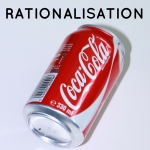 Celebrated psychologist Dan Ariely conducted an interesting experiment in which he placed dollar bills and cans of Coca-Cola around the campus of an American university. When he went back, the dollar bills were all still there – but the Coke cans had gone. (You can read about this, and other experiments, in his fantastic book
  When you’re driving, have you ever noticed that if someone else makes a mistake, then they’re an idiotic and dangerous driver – but if you make a mistake it’s because you were interrupted by a passenger, the car needs servicing, or you were responding to something another car was doing? This effect is known as the
  A few years ago, in a Middle Eastern country, I was delivering a workshop for managers on reducing fraud and corruption. A lady interrupted me to say, ‘but this is just the way things are here!’
 Second Marshmallow