

In this guest post, experienced global development finance professional Najwa Whistler describes her experience investigating ghost NGOs in a conflict zone. Names and details have been changed.
 Some years ago, I found myself investigating events in a program in a war-torn country. The program had been set up to build the capacity of small local NGOs to implement community development projects. The concept was great, the donor funding had been secured, local partner NGOs had submitted proposals and agreements had been signed, transfers had been made and reports had been received. The only problem was that most of these NGOs didn’t exist.
In development sector investigations, one of the first actions upon arriving in-country is to meet with the local program director and understand how the concerns began. But within moments of sitting down with Nancy, I could already start to see how the fraud had arisen.
 Ex-pat Nancy used to be a teacher in Canada, and this was her first job in an international NGO. She was young, and idealistic, but it was clear that she did not have the relevant skills and experience. A conflict zone is a dangerous and stressful place, often with high staff-turnover, and the international NGO had compromised on her qualifications to find someone willing to endure the hardship.
As I talked through Nancy’s concerns that their local partners might not exist, two things became very clear. The first was that Nancy did not have field trip and progress reports and had not visited their offices.
“Why?” I asked.
“Oh, I can’t visit, it’s too dangerous,” she said.
The second was that, instead, Nancy had relied heavily on a single individual to manage this project.
“Can I see the checklist for the review of the partners’ proposals, and who was involved in the decision making?” I asked.
Nancy nodded. “Raj, the national program manager, reviewed the proposals and approved them – then he prepared the contracts.”
Raj had worked for the international NGO for many years. In his late forties and a man of few words, he was a hard worker – the first in the office, the last to leave, and rarely took a day off. Nancy delegated most of her tasks to him.
 When my team drove out to the field to visit the partners and the communities, I went with Malik, a driver, who turned out to be Raj’s brother. The driver tipped off the ‘NGOs’ that we were coming for a visit.
Malik took us to a building consisting of five rooms and a hall way. On the door of each room was a crisp, freshly printed A4 paper with the name of each ’NGO’. In each room sat one man, the ‘managing director’ of each ‘NGO’. Solidarity, cooperation and co-ordination between NGOs at its best perhaps, and rarely seen to such an extent!
Malik was not the only person I met that day close to Raj. All five men came from the same village, and the same kinship group, as the brothers. This was surprising too – as the community development projects were in an area where the majority of locals were from a different kinship group – one with a long history of conflict with that of the brothers.
Over the day, I sat with each ‘managing director’ and asked about the progress of the work, the challenges, their records and their reports. Not one could locate any team members, volunteers or records with whom I could engage.
“I keep the documentation at my house because it is not safe to keep them in this building,” said one. Perhaps unsurprisingly, he would not allow us to follow him to his house or wait while he retrieved the documents as the house was ‘too far’.
Unfortunately, this picture is not unusual. But the red flags were visible in this case – and there are things we can do to better spot them and manage these risks.
 Firstly, ensure a realistic and validated assessment of potential partners takes place. More than one person or function needs to be involved in this assessment, and it should compare project proposals. Involve logistics and procurement teams to verify market rates.
Secondly, constantly review your project management approach during its lifecycle. Perform regular visits to the projects when the security situation allows. Ask the team members of the local partner organisation to meet you at your office from time to time.
Thirdly, even in environments where we trust our colleagues, ensure that you take a robust approach to verification. If security doesn’t allow you to physically visit the project, perhaps you can ask for GPS located photos of activities – and do not be afraid to ask for them again if the first ones look odd! Interview beneficiaries over the phone. Talk to donors and other international organisations working in the same area about their experiences.
 Najwa Whistler is a finance director with 18 years of experience working for several international NGOs around the world. Growing up in a small village in Lebanon in poverty during the civil war built her resilience and determination to work in international development. She enjoys cooking and dancing. You can reach her via naj.whistler@gmail.com
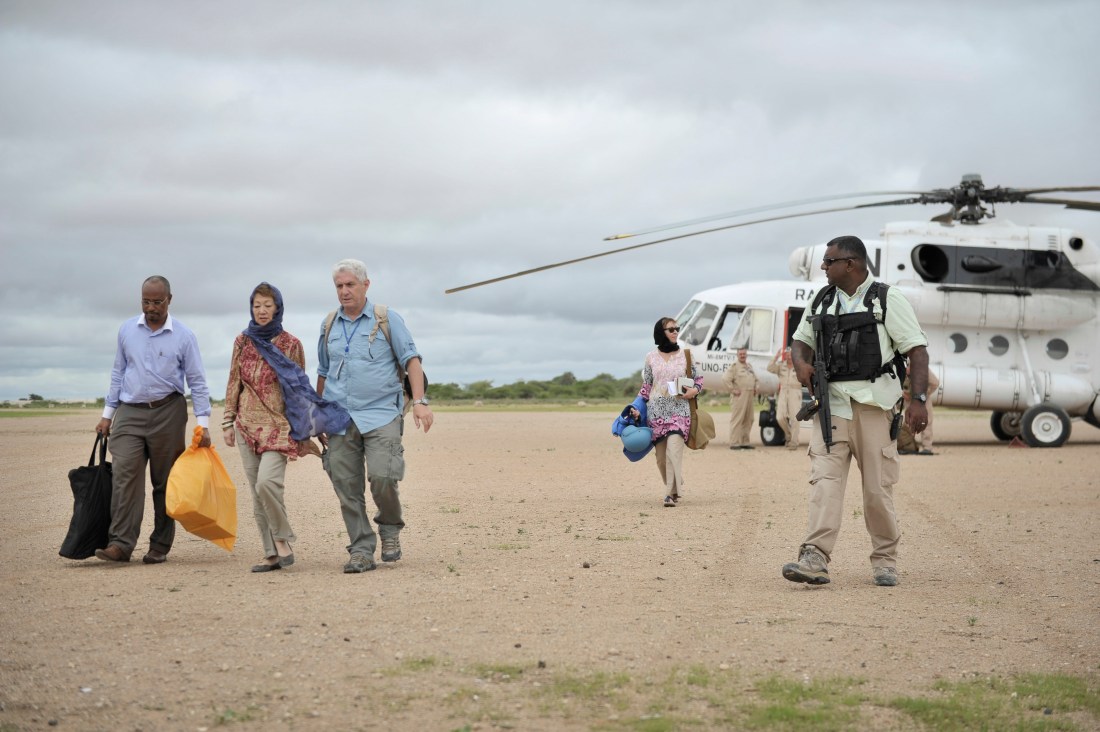
 But there is a tension. Case studies such the UN’s experience in Somalia support a perception amongst many in the sector that, generally speaking, working with local partners represents an elevated fraud and corruption risk. A range of reasons are commonly cited for this, but the most common perhaps is where partners carry lower capacity and capability in finance and wider management by comparison to that of the international agencies, or donor expectations.
 The first is the very reason international agencies often work with them in the first place – they understand their local environment. They know where the risks are, and are in a strong position to evaluate how to reduce them. This can mean more informed planning (how long does it take to get that permit without paying a bribe?) and risk management, if the space is given to it.
 Whether in remote programme management or not, local partners are often physically closer to project delivery or able to more efficiently move around and interact. This is a substantial advantage for monitoring, and the detection of red flags.
 Development expert Jennifer Lentfer tells
  The global coverage of telecommunications is expanding as fast as its costs are declining, meaning that much humanitarian and development work is happens underneath its umbrella. This means that innovative software and hardware solutions to manage and monitor programming are increasingly available and affordable.
 There are corrupt local organisations out there, of course, who have the sole or corollary aim of gaining access for their principals to international agencies’ funds. But the vast majority of local organisations whom I have encountered have been full of passionate people doing amazing work in difficult circumstances. Robust selection processes are needed to ensure that these are the partners who are taken on.
 Find out more about the risk that fraud and corruption pose to humanitarian and global development organisations, and how they can better deter, prevent, detect and respond to it, in my book! Click here to get your copy of Fighting Fraud and Corruption in the Humanitarian and Global Development Sector from the
 Second Marshmallow